Exploring the Versatile Senegalese Condiment, Rof
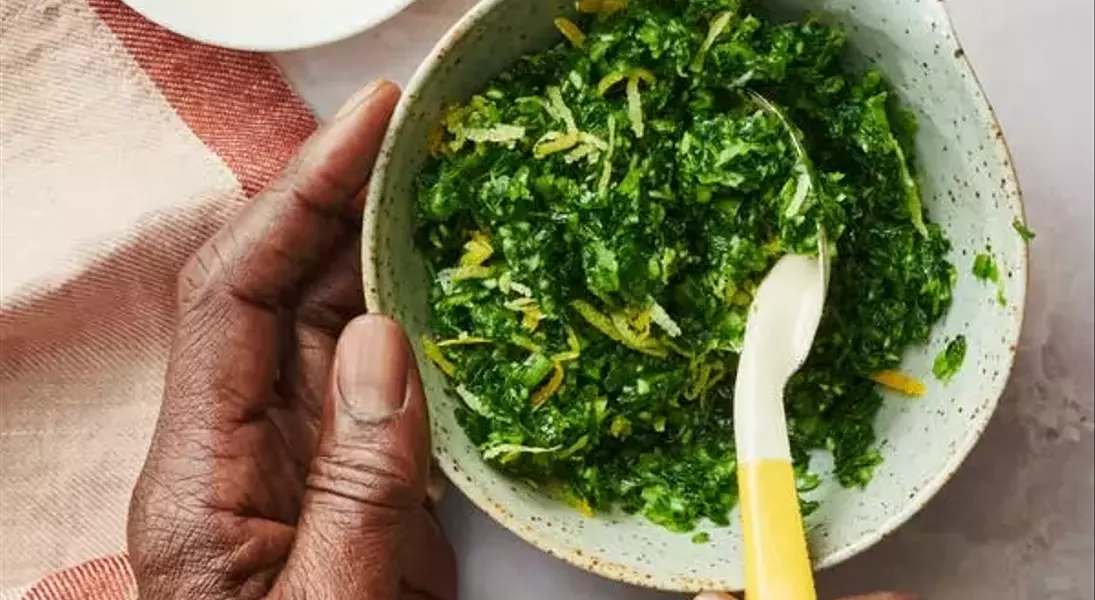
Rof, a vibrant, herb-infused condiment prominent in Senegalese and Gambian culinary traditions, has captivated the author's kitchen, proving its immense versatility. The article features insights from Serigne Mbaye, the acclaimed chef behind New Orleans' Dakar restaurant, who was actively preparing Rof when contacted, underscoring its relevance. The author has enthusiastically incorporated Rof into various dishes, ranging from a marinade for grilled steak to an enriching element in fish and lentil stews, and most recently, as a coating for blistered green beans paired with lemon-mustard tofu.
Chef Mbaye, having grown up in Dakar, the capital of Senegal, affirms the broad applications of Rof, emphasizing its foundational role in Senegalese cooking, where pastes, sauces, and relishes are crucial for both flavor development and food preservation. He notes a distinction between Rof and another traditional purée, nokoss: while nokoss is typically mixed into dishes during cooking, Rof, meaning “to stuff” in Wolof, is employed for filling ingredients like chicken. Mbaye’s approach represents a contemporary interpretation of Senegalese cuisine, building upon traditional methods to create innovative dishes.
The essence of Rof lies in its characteristic green hue and texture, rather than a rigid formula, always featuring coarsely chopped green elements such as parsley, green bell peppers, and green onions. Essential components include fresh herbs, garlic, and a touch of acidity, with oil aiding in its consistency. The author's personal experimentation includes varying citrus fruits, oils, and other herbs, adjusting the spice level by reducing chiles. Rof’s adaptability allows for large batches to be prepared and stored, providing a convenient way to utilize leftover herbs and enhance a wide array of meals, bringing freshness and zest to every bite, even in unexpected pairings like lemon-mustard tofu.
This adaptable and flavorful condiment not only elevates simple ingredients but also embodies a spirit of culinary creativity and resourcefulness. Its ease of preparation and capacity to transform everyday meals into vibrant, exciting dishes highlight the beauty of exploring diverse culinary traditions and incorporating them into modern cooking practices. Embracing such global flavors enriches our dining experiences, fostering a deeper appreciation for the art of food.